
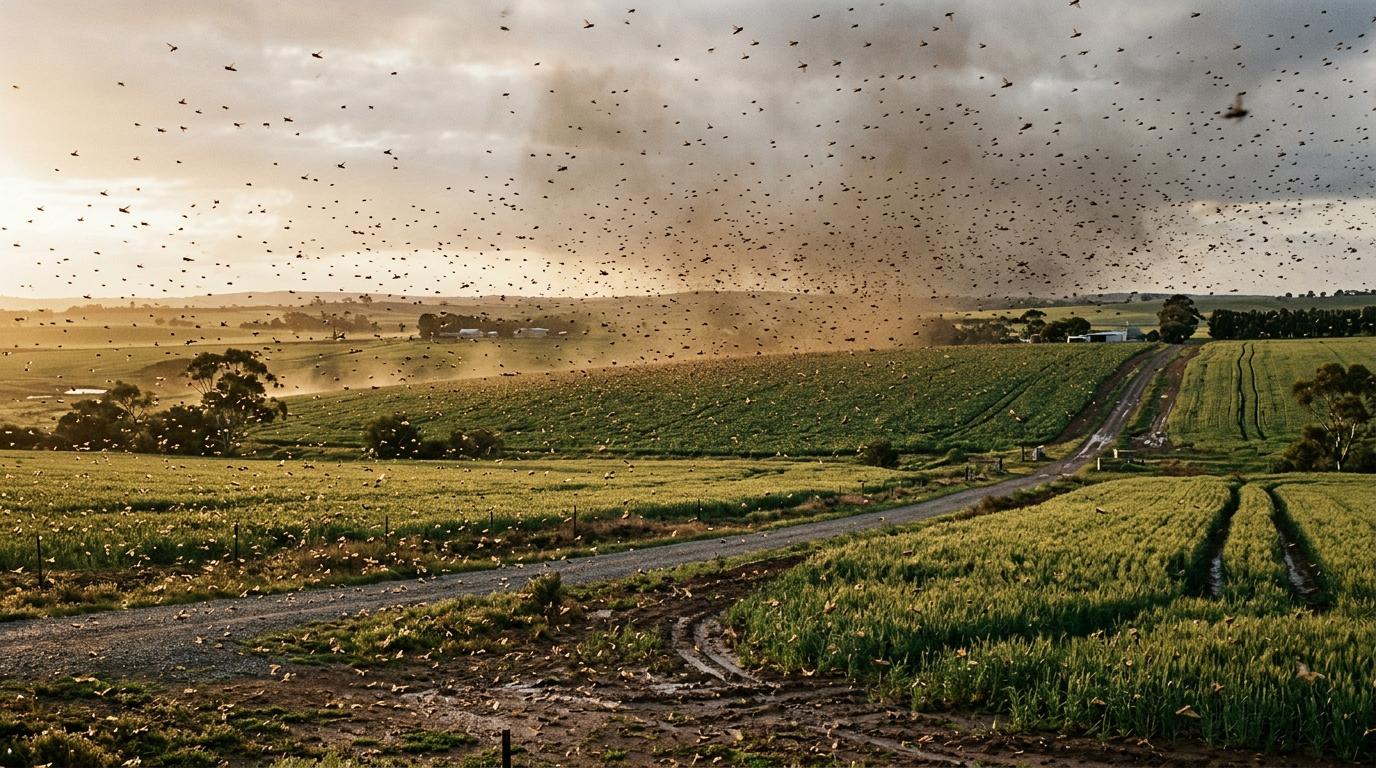
South Australia is facing a possible plague locust outbreak this spring and summer, with increased adult locust activity already reported in the Mallee, Riverland, Flinders Ranges and Eyre Peninsula.
Recent rainfall has produced a large area of crops and pasture, providing favourable conditions for locusts.
Locust eggs may hatch in spring, producing concentrated groups of young locusts known as hopper bands. These can cause significant damage to crops and pastures before developing into mobile adult swarms.
WHAT LANDHOLDERS SHOULD KNOW
The hopper stage is the best time to control locusts, while they are still concentrated and before they become flying adults.
A $4.9 million Chemical Rebate Scheme will provide eligible landholders with rebates of up to $35 per hectare for chemicals used to control locusts.
The scheme: Starts: 1 September 2026
Chemical application period: 1 September to 31 December 2026
Rebate: Up to $35 per hectare
High-risk season: Through to 14 February 2027
Surveillance will also be carried out in areas considered most at risk to identify where locusts are hatching and determine the appropriate control measures.
REPORT LOCUST SIGHTINGS
Landholders and residents are urged to report sightings promptly.
Exotic Plant Pest Hotline: 1800 084 881
Sightings can also be reported online through PIRSA.
https://pir.sa.gov.au/crops-and-plants/weeds-and-plant-pests/plant-pests/pests-and-diseases-of-significant-concern/australian-plague-locust?shorturl_australian-plague-locust
Early reporting is important because locating and controlling hopper bands before they develop into adult swarms provides the best opportunity to limit crop and pasture damage.
Discover more from Coober Pedy Regional Times
Subscribe to get the latest posts sent to your email.
Categories: GENERAL News

