
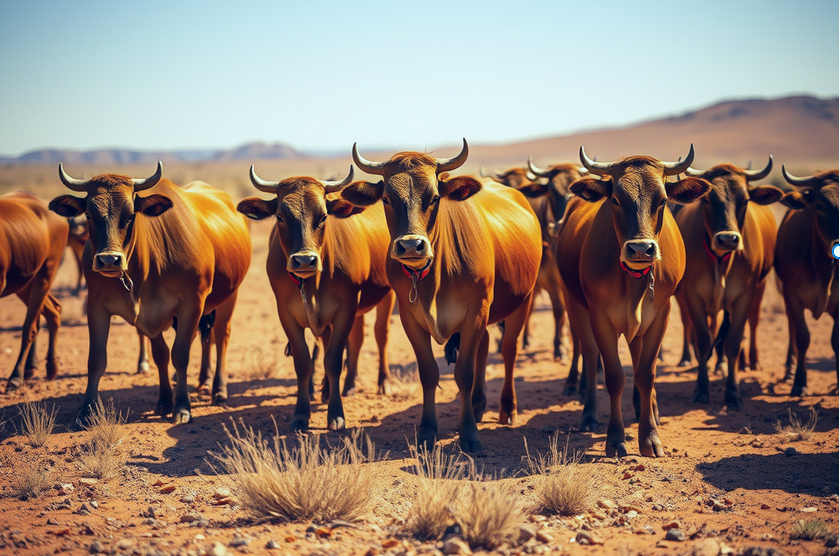
Virtual fencing has been legalised in South Australia, allowing producers to use the game-changing technology to improve cattle management, reduce infrastructure costs and help protect native vegetation.
An amendment to the Animal Welfare Regulations 2012 has been approved, enabling virtual fencing to be used in South Australia’s agricultural sector.
The updates will allow manufacturers to apply to the government for approval of their virtual fencing technology and system from early 2026. Primary producers will then be able to buy or lease an approved system for use in their operations.
Virtual fencing will be used for cattle management only, and applications will be considered against stringent approval criteria and conditions, which ensure animal welfare is at the forefront of any decisions.
Virtual fencing uses collars capable of producing an electric stimulus to contain cattle to an assigned area. The stimulus is significantly weaker than the shock from a standard electric fence.
The devices deliver sound cues – such as a “beep” – if near a virtual boundary and animals learn that, if they continue their direction of movement towards leaving the virtual boundary, they will receive an electrical stimulus. Some systems can also
actively herd animals using vibrations and audio cues, which allow the animals to move at their own pace.
The technology can support more efficient animal and pasture management and reduce costs associated with building and maintaining internal paddock fencing.
Virtual fencing can also allow more precise control over grazing areas, enabling farmers to protect sensitive areas like waterways, native vegetation and wildlife habitat.
Key characteristics and approval criteria include:
• Minimum age requirements for collars being placed on an animal
• Training for the animals and the user
• Safeguards to ensure the technology does not prevent an animal from
returning to a designated area
Clare Scriven MLC Minister for Primary Industries and Regional Development, said, “It’s important that South Australian farmers have access to the best tools available.
Virtual fencing can improve productivity, reduce infrastructure costs, whilst also protecting native vegetation and maintaining high standards of animal welfare.”
“When coupled with individual monitoring, virtual fencing enables farmers to manage their herds on an individual animal basis far more effectively. It allows them to see their cattle around the clock and get alerts if there are any health concerns.” “Virtual fencing also supports animal safety during emergencies such as bushfires or floods as it can be easily disabled to allow cattle to move to safety.”
Key Milestones in Development
- 1973: First Commercial Patent – The first “invisible” fencing system was patented for domestic dogs and cats. This early version required a physical wire to be buried underground to transmit signals to a pet’s collar.
- 1987: First Livestock Trials – Researchers began testing these systems on livestock (specifically cattle and goats) to see if they could replace physical farm barriers.
- 1999–2005: Shift to GPS – The first patent for a GPS-based system was filed in 1999, removing the need for buried wires. Organizations like Australia’s CSIRO began intensive R&D in 2005 to refine autonomous control based on animal behaviour.
- 2011–2017: Commercial Launch – Norwegian company Nofence (founded in 2011) and other startups began moving toward commercial viability, with the first systems for livestock becoming widely available around 2017.
- 2021–2025: Global Adoption – Major agricultural companies like Gallagher and Merck Animal Health acquired early startups to scale the technology globally. In late 2025, several Australian states (NSW, Victoria, South Australia) passed laws to officially legalize and regulate its use for livestock.
16 December 2025
Discover more from Coober Pedy Regional Times
Subscribe to get the latest posts sent to your email.
 Coober Pedy Regional Times